History
Lifestyle
Our Friendly Neighbors: Butch Cassidy, Sundance Kid and Etta Place in Cholila
Most people know how the movie ends. Two men burst out of a building in Bolivia into a wall of rifle fire, and the frame freezes.
What the movie skips is the part that happened here. Before Bolivia, Butch Cassidy and the Sundance Kid tried to stop being outlaws. For four years they were ranchers in Cholila, in northern Chubut, a couple of hours south of where I live. They had a log cabin, a woman who could outshoot most men in the valley, a herd of cattle, and neighbors who liked them.
Some of those neighbors were my family's people.
Getting out of America
By 1901 the Wild Bunch was finished. The Pinkerton National Detective Agency had their photographs, and the American West was running out of places to hide.
On February 20, 1901, Robert LeRoy Parker, better known as Butch Cassidy, sailed from New York on the British steamer Herminius. With him were Harry Longabaugh, the Sundance Kid, and Etta Place, who traveled as Sundance's wife. Nobody has ever proven where Etta came from or what her real name was.
In Buenos Aires they deposited $12,000 in gold notes at the Banco de Londres y Río de la Plata. They also went to see George Newbery, an American dentist, land developer and vice-consul, who was promoting homesteads in the new territories of the south. Newbery pointed them toward Chubut.
They introduced themselves with new names. Butch became James "Santiago" Ryan. Sundance and Etta became Harry "Enrique" and Ethel Place.
The road south
There was no easy way to reach the Andes in 1901. The accounts disagree on the exact route, and the trio did not keep a diary, but the places that claim them trace a line across Patagonia: the Welsh towns of the Chubut valley on the Atlantic side (the Hotel Touring Club in Trelew still keeps a room in their name), the long ride west across the steppe, and the Nahuel Huapi country, where the region's few English-speaking settlers traded, drank and played cards.
At the end of it was Cholila: a wide, well-watered valley under the cordillera, with Welsh families already farming it and plenty of grass going unclaimed.
A homestead on the Río Blanco
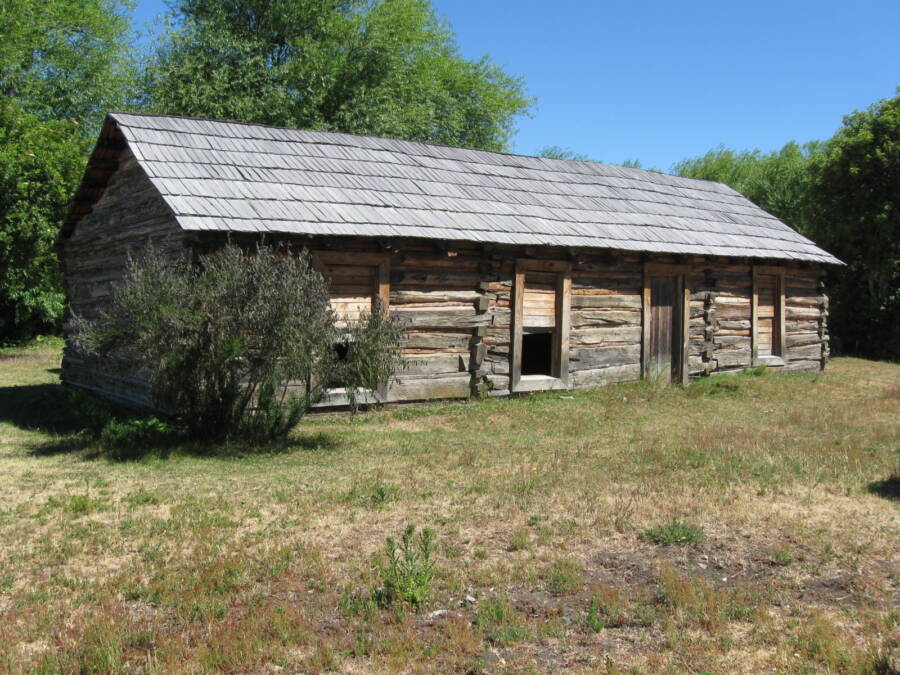
They built on the eastern bank of the Río Blanco. The cabin was made of horizontal logs with a cypress-shingle roof, sash windows and wallpaper on the inside walls, which was a luxury in the valley at the time. In August 1902 Butch wrote to a friend's mother-in-law back in Utah describing their "little family of 3" in a four-room house, with cattle, sheep and horses.
They meant to stay. In May 1902 Butch and several neighbors signed a joint letter to the Argentine government asking for title to 625 hectares each. That October, Sundance filed a petition in Buenos Aires to buy 2,500 hectares. By early 1905 the ranch reportedly counted around 900 cattle, 1,500 sheep and 40 horses.
They were good neighbors, by every local account. In March 1904 the governor of Chubut, Julio Lezana, visited the valley and was their guest at the ranch. The story in Cholila is that Etta danced with him that night.
What the neighbors saw
My great-grandfather wrote a history of the Nahuel Huapi region, and this is where the outlaws walk into our family's story.
His father, Enrique Neil, was a Scot who came to Argentina in 1881 to work for that same Banco de Londres y Río de la Plata. He left the bank for the cordillera and became the partner, for thirty years, of Jarred Jones, a Texan who was the first settler of the Nahuel Huapi country. Jones and Neil ran cattle, then a wagon freight line from General Roca to the lake, and a small store near the head of the Río Limay.
In the memoir, the Places and "un tal Rhyan" (a certain Ryan) are part of a small colony of North Americans in Cholila. What set them apart, my great-grandfather writes, was money. The other Americans were struggling. This group bought 1,000 cows from the English company at Leleque and paid cash. Place rode up to Nahuel Huapi and bought 12 Polled Angus bulls from Jones, also for cash. They spent generously among their neighbors and were treated with respect, "although the source of the money they spent so liberally always intrigued the neighbors."
Enrique Neil knew them. They played poker with him on their trips up to the lake. He noticed nothing wrong at the table, the memoir says, "but you could see they were experienced players."
Then comes the scene I love most. In 1905 Jones traveled to Cholila with his wife and three small children to visit a relative, Juan Perry. (John Commodore Perry had been the first sheriff of Crockett County, Texas, and had settled just south of the outlaws. A Texas lawman living next door to the Wild Bunch is a detail no screenwriter would dare.) The Places and Ryan insisted the Jones family stay with them, and received them warmly.
That afternoon, while his hosts were out, Jones went for a walk. He followed a small path into a thicket of chacay and found a cleared space, about four meters by four, hidden in the brush. It was a slaughter site, and a secret one. Cattle heads and hooves were scattered through the trees. Jones walked back to the house convinced he was a guest of dangerous cattle thieves.
He told his wife that night, and they decided to leave in the morning. Their hosts would not hear of it, and the family stayed a second night. Jones spent the day riding with the Places and Ryan. At midday they started shooting at targets. Jones considered himself a good shot. He could not keep up with the men, the memoir says, and he could not keep up with Mrs. Place either, "who was also an exceptional marksman."
Jones kept quiet in Cholila. As soon as he could, he rode home and told Enrique Neil everything.
A small note for the historians: my great-grandfather dates the American colony to 1904, which is a few years late. Family memoirs compress time. The details, down to the Angus bulls, fit everything else we know.
The Pinkertons come asking
The Pinkertons had known roughly where the fugitives were for some time. An agent, Frank Dimaio, reached Buenos Aires in 1903 with their photographs, but the snow and the length of a Patagonian winter kept him from ever reaching the valley. The agency passed the wanted notices to the Argentine police instead.
On February 14, 1905, two English-speaking bandits robbed the Banco de Tarapacá y Argentino in Río Gallegos, far to the south. Suspicion fell on the Americans in Cholila. That autumn, a local police officer, Edward Humphreys, received orders to bring them in for questioning. By most accounts he was a friend, and he warned them first.
On May 1, 1905, the ranch was sold. Santiago Ryan and the Places rode north, toward Nahuel Huapi, and crossed into Chile. The homestead they had petitioned the government for, with the cabin and the wallpaper, was left behind.
After Cholila
The rest of the story moves fast. In December 1905 they robbed the Banco de la Nación in Villa Mercedes, San Luis, and fled across the Andes again. In June 1906 Etta Place had had enough. Sundance took her back to San Francisco, and after that she disappears from the record entirely.
Butch and Sundance went to work at a tin mine in Bolivia. In November 1908, after a mine payroll robbery, two American bandits died in a standoff at San Vicente. Most historians accept they were Butch and Sundance. People in Utah and Patagonia still argue about it.
If you go
The cabin in Cholila still stands on the Río Blanco, restored, and is open to visitors. A few meters away, the old general store has been turned into a bar and small museum.
The Museo Leleque, on Ruta 40 between El Maitén and Esquel, sits on the land of the same English company that sold the outlaws their 1,000 cows. Its immigration room mentions Butch and the Sundance Kid as cattle buyers, the exact role they play in my great-grandfather's memoir. People in the area will also tell you that Butch's gun is in that museum. I have not been able to confirm it in any published source, so treat it as local lore until you see it in the case yourself. Check opening hours before you drive.
Jones's old store, near the head of the Limay outside Bariloche, is remembered today as El Boliche Viejo, a stop the outlaws are said to have used on their way through.
What stays with me is not the robberies. It is that three people with every reason to keep running chose this valley, built a house, bought good bulls, and tried to become ordinary. Cholila still has that effect on people. It is wide, quiet and a long way from everything, and it makes you want to stay.
Sources
My great-grandfather's unpublished memoir of the Nahuel Huapi region (family manuscript), chapters on Jarred Jones and Enrique Neil.
Wikipedia, Butch Cassidy and Sundance Kid. Departure on the Herminius, the 1902 letter, Pinkerton agent Frank Dimaio, Río Gallegos and Villa Mercedes robberies, Etta's return to San Francisco, San Vicente.
True West, Buenos Aires, 1901. Aliases, the $12,000 deposit, George Newbery.
True West, Back at the Ranch. Land petitions, John Commodore Perry, Governor Lezana's visit, Edward Humphreys.
Diario Río Negro, Pistoleros en la Patagonia. The cabin's construction, herd size, departure on May 1, 1905.
Sol Salute, Following Butch Cassidy's Outlaw Trail in Argentina. The cabin and museum bar today, El Boliche Viejo, Hotel Touring Club in Trelew.
Perfil Weekend, Museo Leleque and Rincones del Sur, Visita al Museo Leleque. The museum's references to Butch and Sundance.